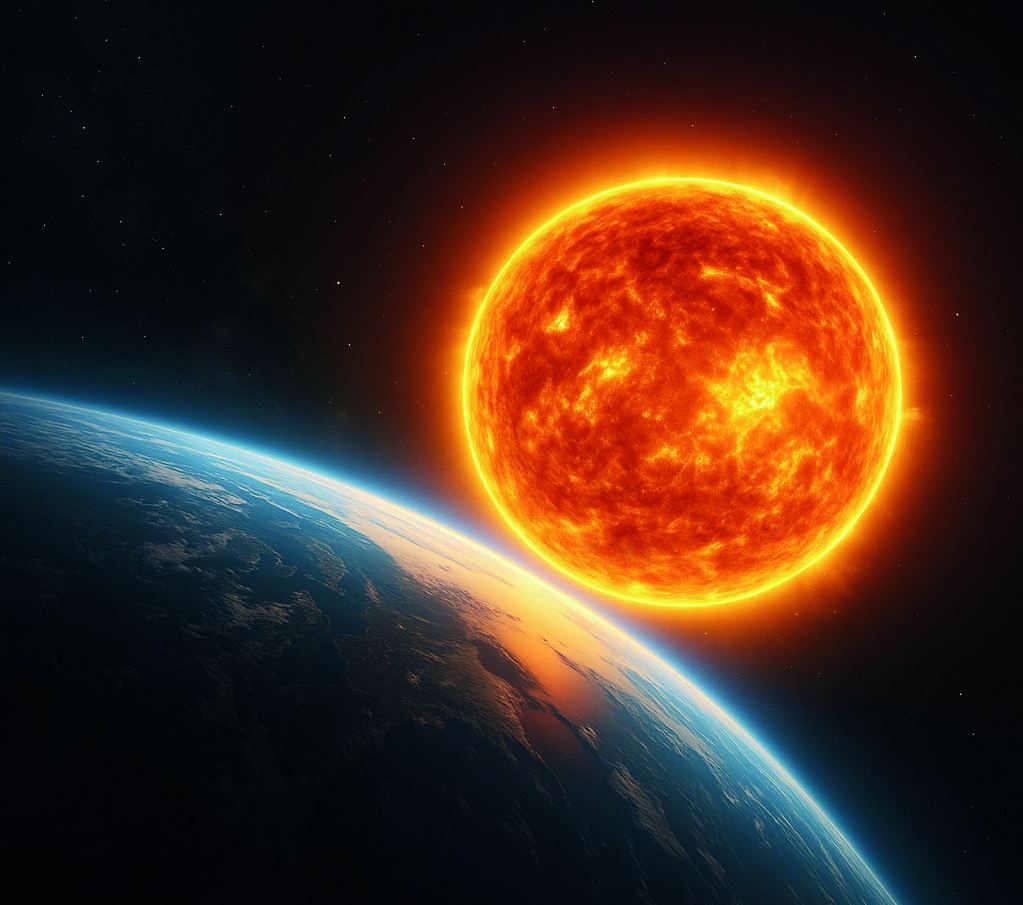
Space weather
Arrival time and risk of solar storms, for data centres, grids and satellite operators.
Overview
Sun-to-Earth forecasts that protect what you run.
A coronal mass ejection reaches Earth in one to three days. Satellite operators need arrival time and risk before impact, yet part of the Sun has gone unobserved since the STEREO-B spacecraft was lost in 2014.
AtharX is building a sovereign, operational space-weather capability for the Kingdom.
Sun-to-Earth simulation
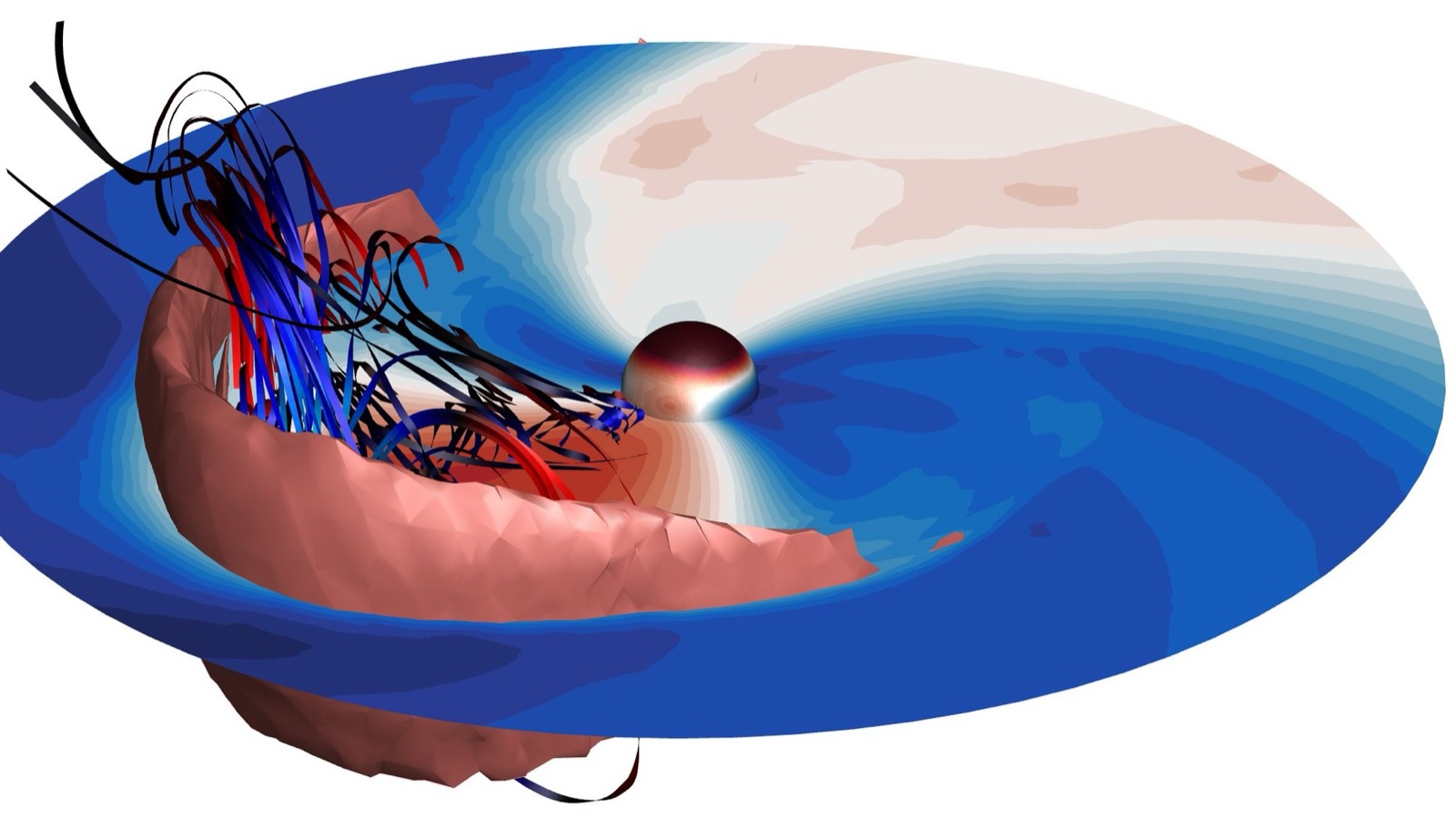
High-order magnetohydrodynamic simulation of the solar wind and coronal mass ejections, from the Sun to Earth.
Faster than real time
AI acceleration turns the simulation into forecasts: arrival timing, risk indicators and alerts.
The whole Sun, always
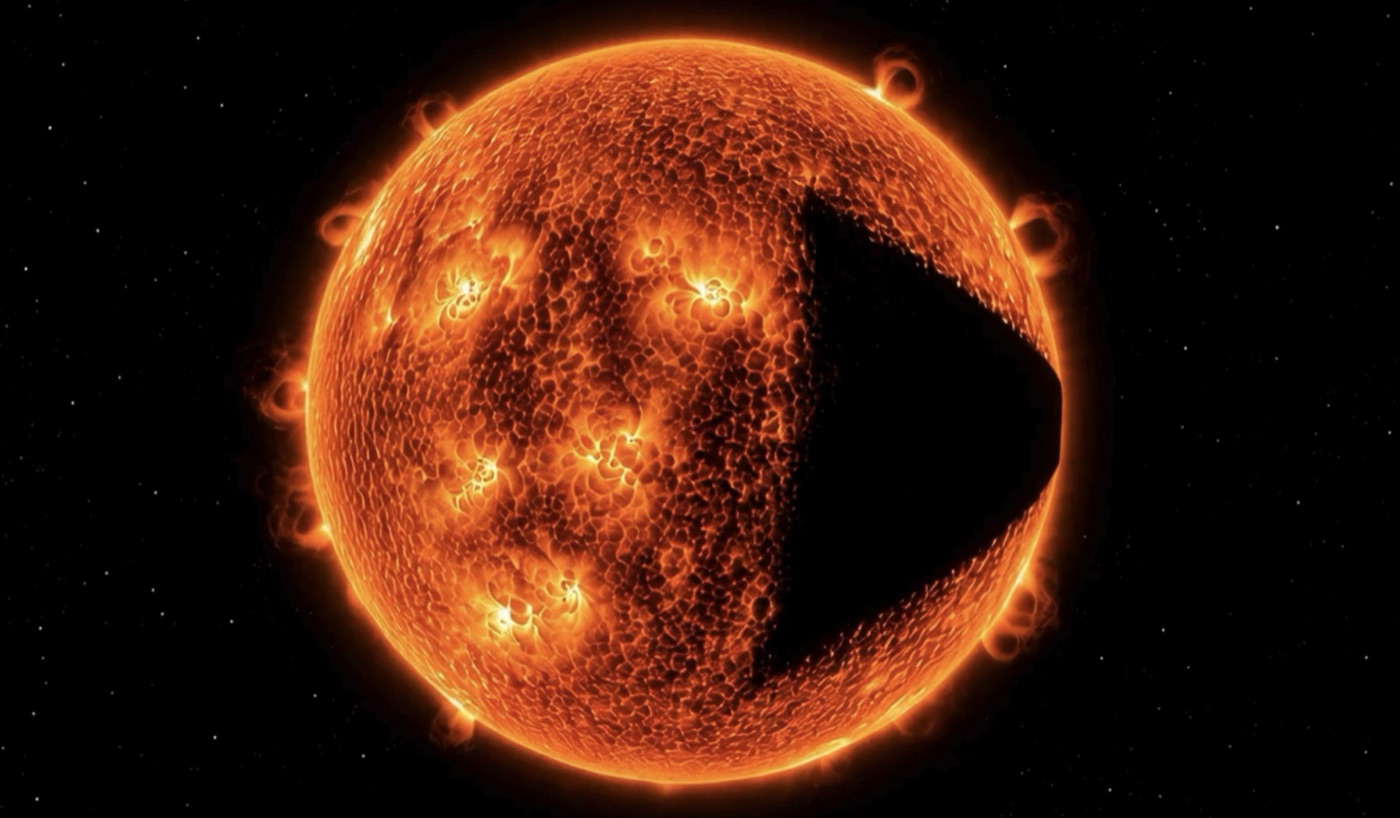
Gap filling (HelioFill) reconstructs the part no spacecraft sees, so a forecast can start from a complete solar map.
Where it applies
- Satellite operators
- Grid operators
- Data centres
- Telecoms
- Space agencies
Simulations
Sun to Earth in one to three days.
In motion
From the Sun to the grid.
A solar storm reaches Earth in one to three days. We simulate it from the Sun to Earth, and fill in the part of the Sun no spacecraft sees.
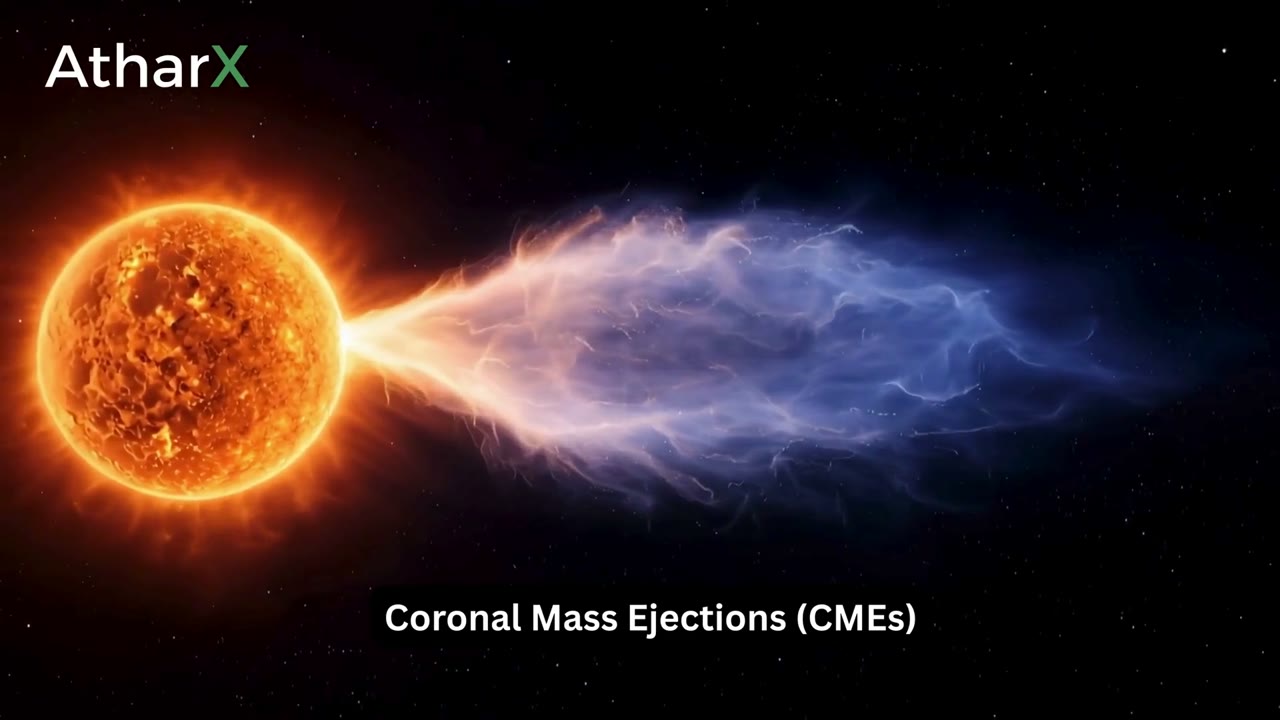 Video 0:45
Videos